Beginner Tips for Dice Have No Eyes
Bank before greed wins, spend snacks on purpose, and build trinket synergies that survive a bust threat.
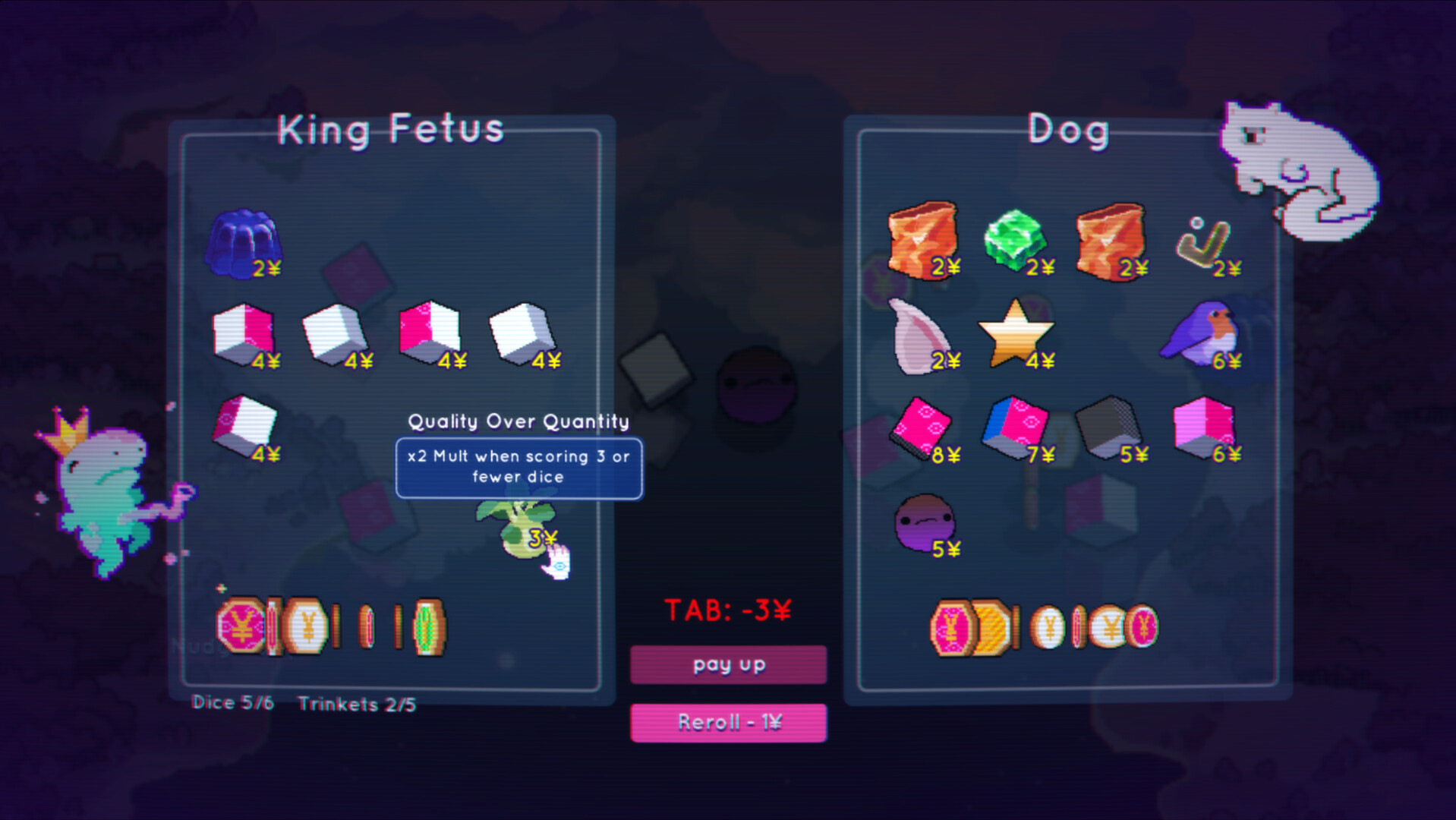
Dice Have No Eyes punishes the exact impulse that makes it fun. Franek and Max Cahill built a surreal Balatro-like dice roguelike where one more roll can double a turn or erase it. These beginner tips assume you already know the outline from Getting Started and the rules from How to Play. If board names are fuzzy, skim Depths and Boards first. This page is about practical discipline: when to stop, when to spend, what to buy, and how to keep a run alive long enough for 1.0 toys like endings, mid-run saves, achievements, and leaderboards to matter.
Tip 1: Bank before greed eats the run
The strongest beginner skill is stopping. If the points on the table already clear the board need, bank them. A modest banked score beats a legendary pile you lost because the dice looked friendly. Say the bank decision out loud if you have to. The game’s store-page monologue from “you’re smart” to “you’re stupid” is not flavor only; it is the tutorial.
Create a personal rule for the first dozen runs: no optional rolls after the requirement is met unless a snack or spell makes failure cheap. Break the rule later on purpose, not by accident.
Tip 2: Treat snacks and spells as insurance, not museum pieces
There are more than forty spells and snacks. Beginners hoard them for a perfect moment and then bust with a full pocket. Spend protection when a bust would erase real progress: a nightmare board, a bet tax in Faraway Lands, or a hot momentum turn you cannot afford to reset the hard way.
Timing matters more than rarity. A cheap snack that saves a Shallows clear teaches better habits than a flashy spell you never click. After you spend, rebuild the reserve at the next shop instead of entering the following board naked.
Tip 3: Feed dice like a build, not a joke
Feeding dice dumplings and managing dice babies sounds cute because it is cute. It is also your consistency engine. Improve and swap dice after cleared levels so the hands you already score become more common. A die that supports pairs and straights you actually roll is better than a mysterious legendary that fights your pattern.
Learn magic effects such as Mirror, Skip, Hardy, and Doom before you slam every shiny upgrade. Hardy can justify a roll that would be foolish on fragile dice. Doom-tagged tools demand sequencing. If you cannot explain what a die does in one sentence, do not bet the run on it yet.
Tip 4: Buy trinket synergies, not isolated stats
The game advertises more than one hundred trinkets because combinations are the point. Beginners often buy the largest number they see. Stronger runs come from two or three pieces that bend the same rule: safer banks, better hand conversion, or clearer bust protection.
Before a purchase, ask what problem the trinket solves on the next board. If the answer is “it looks cool,” keep the money. Shop discipline in the Shallows becomes bet survival in Faraway Lands and depth control in the Rift. For relative strength debates later, use the Tier List hub after you have your own notes.
Tip 5: Pick companions that match your greed level
Thirteen companions offer unique powers. An aggressive companion on a timid player creates constant overreach. A careful companion on a chaos goblin creates ignored tools. Choose a companion that corrects your worst habit. If you bust by chasing glory, pick stability. If you under-roll and stall boards, pick a power that rewards calculated pushes.
Characters teach pacing too. Wizard and Liz are readable starter fantasies. Anais can lean into darker cash plays involving dice children; save that until banking is automatic. Unlock goals such as King Fetus, the Tooth Fairy from 1.0, or the dog companion are rewards for stable play, not shortcuts around it. See Players when you are ready to compare faces without abandoning fundamentals.
Tip 6: Play each depth for its lesson
Shallows teach extra bust pressure and limited-star humility across seven levels and two nightmares. Faraway Lands add ten levels, three nightmares, and bets. The Rift asks how deep you choose to fall. The God run asks whether you learned anything. Do not skip the lesson. A player who speedruns into the finale without a bank policy is volunteering for a sermon from the God n’ Fate engine.
Set depth goals before the session. In the Rift, write the target depth down. In Faraway Lands, decide your bet threshold. In the Shallows, decide that a clean clear beats a stylish death. Details live in Depths and Boards.
Tip 7: Use 1.0 quality-of-life like a coach
The full release on November 20, 2026 adds mid-run saves, endings, achievements, leaderboards, cassette playlists, rebalanced upgrades, and controller or Steam Deck improvements after Early Access from May 19, 2026. Mid-run saves are a tilt breaker. Stop after a bust streak. Resume later. Leaderboards reward consistency; they do not require you to play angry. Night mode and playlists keep long sessions readable. Rebalances mean your Early Access comfort picks may need a fresh test.
Tip 8: Review failures with one sentence
After a dead run, summarize the loss in one sentence: “I rolled after the requirement,” “I hoarded snacks,” “I bought toys instead of protection,” or “I entered Faraway Lands with inconsistent dice.” Then open the matching guide. Rules failures go to How to Play. Route failures go to Getting Started. Depth failures go to Depths and Boards. Come back here when the issue is habit.
A short pre-board checklist
- What score do I actually need?
- What is my bank rule for this board?
- Which snack or spell am I willing to spend?
- Which die effect changes the risk?
- Am I playing Shallows lessons, Faraway bets, Rift pride, or God run finale rules?
If you cannot answer those five, take a slower board plan. The dice have no eyes. Your checklist can.
Common beginner mistakes to retire
Do not treat every hot hand as a mandate to continue. Do not enter nightmares with empty protection. Do not ignore shop swaps because the current dice “feel lucky.” Do not chase King Fetus or finale content while you still bust on requirement-met boards. Do not confuse single-player leaderboards with a need to force sweaty sessions on Steam Deck when you are tired; the game is Playable there, not a demand that you grind while exhausted.
Keep the wiki loop tight
Bookmark the Guides hub for the full index. Use Updates when patches shift balance. Keep Players and the Tier List for loadout talk after your banking is boring. Boring banking is the skill. Everything else is decoration until that skill sticks.
Frequently Asked Questions
Quick answers to the most common questions.
What is the most important beginner tip for Dice Have No Eyes?
Bank when the board need is met. A smaller banked score is almost always better than a larger pile lost to one extra roll.
When should I spend snacks or spells?
Spend them when a bust would erase real progress, especially on nightmares, bet boards, or hot momentum turns you cannot afford to lose.
Should I optimize trinkets or dice first?
Stabilize dice feeding and consistency first, then buy trinkets that synergize with the hands and risks you already take.
How do I pick a beginner companion?
Pick a companion that corrects your worst habit. If you over-roll, choose stability. If you under-roll, choose a power that rewards planned pushes.
How do mid-run saves help beginners?
1.0 mid-run saves let you stop after tilt busts and resume later, which protects learning better than forcing another greedy board while angry.