Dice Have No Eyes Guides
Learn the roll–bank–bust loop, clear the Shallows, and push deeper without throwing the run away.
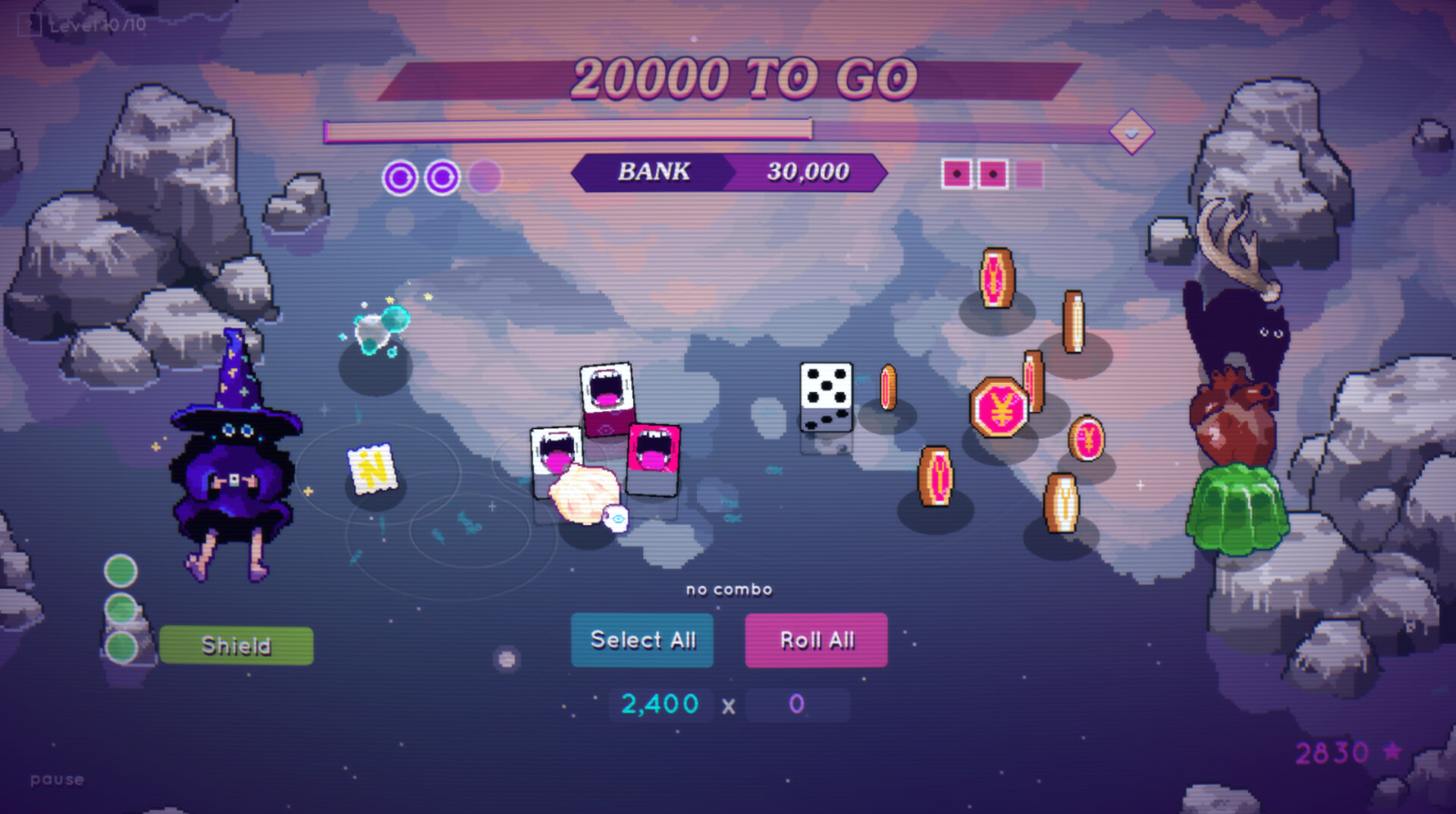
Welcome to the Dice Have No Eyes guides hub. This surreal dice-rolling Balatro-like from Franek and Max Cahill is built around one brutal question: how greedy are you willing to get before the table takes everything back? You roll for poker-like hands, bank a score, or risk another throw. Bust wipes unbanked points. Momentum rewards scored hands and resets when the turn ends. Between boards you feed dice, buy trinkets, cast spells, and chase synergies across more than one hundred trinkets and forty-plus spells and snacks.
Use this hub as the map. Start with onboarding if you just launched the game, then move into scoring rules, depth layouts, and practical greed discipline. Cross-check character options on the Players hub, browse relative power on the Tier List hub, and track patches on Updates. Everything below links only to live guide pages on this wiki.
Start here
New players should open Getting Started first. That guide covers the first hour in the Shallows, how banking feels in practice, how the shop fits between levels, and why feeding dice early matters more than chasing flashy high rolls. It also frames the 1.0 features that change the long game: mid-run saves, endings, achievements, leaderboards, and the cassette playlist.
Once the basic loop clicks, read How to Play. That page digs into bust math, momentum, when to bank, and which poker-like hands you are actually chasing. If you keep busting with a decent pile on the table, that guide is the fix.
Depths, boards, and endgame structure
Dice Have No Eyes is not one endless casino table. Progress moves through distinct depths with different pressure. Depths and Boards explains the Shallows (seven levels, two nightmares, beginner-friendly rules with extra bust chance and limited stars), Faraway Lands (ten levels, three nightmares, betting pressure), the Rift (endless depth you choose how far to push), and the God run finale. Learn which board teaches which habit before you treat every table like a high-stakes sprint.
Nightmares, bets, and endless depth all change when a “good enough” bank becomes the correct play. That page is also where you should look before attempting a God run, so you understand what the finale asks of a build that survived earlier worlds. When you are ready for the 1.0 finale itself—prep from Faraway Lands and Rift, banking under pressure, ending scenes, mid-run saves—open the dedicated God Run guide.
Practical tips, effects, and greed control
Theory only helps if you stop rolling one throw too late. Beginner Tips focuses on snacks and spells timing, companion choice, trinket synergy over raw stats, and the discipline to bank before greed eats the run. Pair it with How to Play when you understand the rules but still tilt into busts.
Named magic tools need their own map. Dice Effects covers Mirror, Skip, Hardy, Doom, cracked or unholy die states after 1.0 polish, and how babies plus snacks finish a verb instead of starting five unfinished museums.
What these guides assume
These pages assume the full 1.0 release that landed on November 20, 2026 after Early Access from May 19, 2026. The game is single-player on Steam, marked Steam Deck Playable, with controller and Deck improvements in 1.0. Content here leans on the published systems: magic dice effects such as Mirror, Skip, Hardy, and Doom; dice babies; thirteen companions; characters including Wizard, Liz, and Anais; unlocks such as King Fetus; and later additions like the Tooth Fairy. We do not invent codes, scripts, or multiplayer modes that do not exist.
How to use the hub during a run
Before a session, skim Getting Started if you are still learning the shop and dice feeding loop. Mid-run, when a board feels unfair, jump to Depths and Boards to confirm what that depth is designed to punish. After a tilt streak, read Beginner Tips and force a few “bank early” boards until discipline returns. When you want roster or ranking context, leave the guides section for Players and the Tier List.
Related reading outside guides
Guides teach decisions. The rest of the wiki helps you choose tools. Companions and playable faces live under Players. Relative strength conversations belong on the Tier List hub. Patch notes and 1.0 changelog framing sit on Updates. Keep those hubs bookmarked once you leave the tutorial boards behind.
Guide index
- Getting Started — first hour, Shallows, banking, shop, dice feeding
- How to Play — bust math, momentum, banking decisions, scoring hands
- Depths and Boards — Shallows, Faraway Lands, Rift, God run, bets, nightmares
- Beginner Tips — practical greed control, snacks, spells, synergies
- God Run — 1.0 finale prep, endings, banking discipline, mid-run saves
- Dice Effects — Mirror, Skip, Hardy, Doom, babies, cracked/unholy dice
Return here whenever a run teaches you a new failure mode. The dice have no eyes. Your job is to keep yours open.
Frequently Asked Questions
Quick answers to the most common questions.
Which Dice Have No Eyes guide should I read first?
Start with Getting Started for the first hour in the Shallows, then How to Play for bust math and banking, then Beginner Tips once the loop feels familiar.
Do these guides cover the full 1.0 release?
Yes. They assume the November 20, 2026 1.0 launch after Early Access, including mid-run saves, endings, achievements, leaderboards, and the God run finale.
Is Dice Have No Eyes multiplayer?
No. It is a single-player Steam game with leaderboards. These guides focus on solo run decisions, not online multiplayer or PvP.
Where do character and tier rankings live?
Use the Players hub for roster context and the Tier List hub for relative strength. This Guides hub stays focused on how to play and clear depths.
Where are God run and dice effects covered?
Open the God Run guide for finale prep and endings, and Dice Effects for Mirror, Skip, Hardy, Doom, babies, and 1.0 die-state polish.